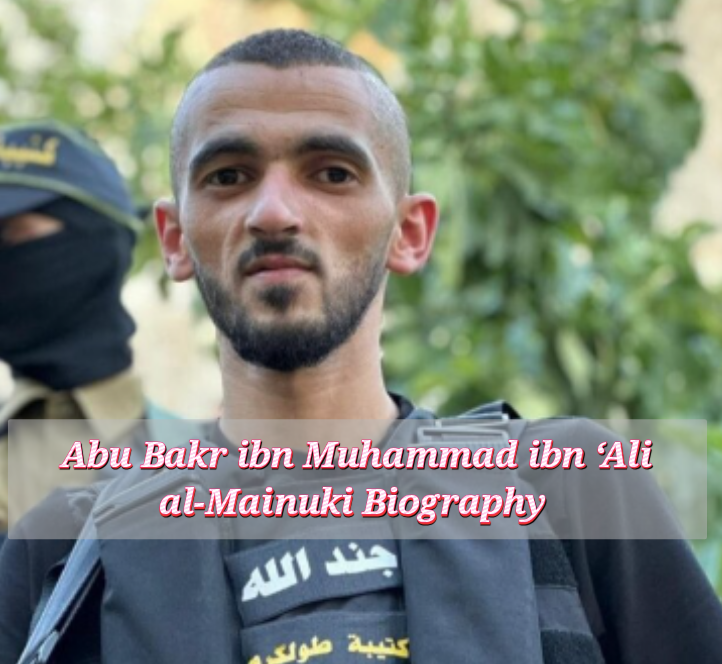
Abu Bakr ibn Muhammad ibn ‘Ali al-Mainuki Biography: Age, Early Life, Career, Personal Life
Abu Bakr ibn Muhammad ibn ‘Ali al-Mainuki Biography
Abu Bakr ibn Muhammad ibn ‘Ali al-Mainuki, widely known as Abu Bilal al-Minuki or Abu Bilal al-Manuki, was a prominent Nigerian leader within the Islamic State group. He served as the director of global operations and was considered one of the most influential figures in the organization, often described as its second-in-command. His work focused on strengthening ISIS activities across West Africa and beyond, particularly through the Islamic State West Africa Province.
Al-Minuki played a central role in coordinating attacks, managing finances, and expanding the group’s reach in the Sahel region. Starting from his roots in Boko Haram, he rose to become a key strategist in ISIS networks. Designated a global terrorist by the United States, he remained active until his death in a joint military operation on May 16, 2026.
Abu Bakr ibn Muhammad ibn ‘Ali al-Mainuki Early Life and Background
Abu Bilal al-Minuki was born in 1982 in Mainok, a town located near Benisheikh in Borno State, northeastern Nigeria. His full name, Abu Bakr ibn Muhammad ibn ‘Ali al-Mainuki, follows traditional naming patterns, with the kunya “al-Minuki” or “al-Manuki” referring to his place of origin in Mainok. This area in Borno State has long faced economic difficulties and social unrest, conditions that contributed to the rise of militant groups in the region.
Growing up in the early 1980s and 1990s, al-Minuki experienced the challenges common to many families in rural Borno, including limited access to education and opportunities. Public records provide few details about his immediate family or childhood years. However, the environment around him was shaped by religious teachings and growing discontent that later fueled the Boko Haram insurgency starting around 2009.
As a young adult, he became involved in militant circles. He first gained notice as a member of Boko Haram, where he developed skills in combat and leadership. His early involvement helped him build a reputation as a dedicated and strict figure within the group. The instability in Borno State during this period played a major part in forming his path toward extremism. Many young men from similar backgrounds joined the insurgency due to a mix of ideological influence, economic hardship, and local conflicts.
By the time Boko Haram intensified its campaign of violence, al-Minuki had already established himself as a reliable commander. His background in this troubled region gave him deep knowledge of the local terrain, communities, and dynamics that proved valuable in his later roles.
Abu Bakr ibn Muhammad ibn ‘Ali al-Mainuki Career
Al-Minuki launched his militant journey as a senior commander in Boko Haram. He took part in numerous operations that targeted security forces, civilians, and public infrastructure across northeastern Nigeria. His leadership approach emphasized discipline and commitment, which earned respect among fellow fighters and helped him climb the ranks.
In 2015, a major shift occurred when he pledged allegiance to the Islamic State. This move aligned him with the faction that evolved into the Islamic State West Africa Province, known as ISWAP. Following the death of ISWAP leader Mamman Nur in 2018, al-Minuki emerged as a powerful voice within the group. He gradually assumed broader responsibilities that extended beyond local fighting.
As director of global operations for ISIS, he oversaw critical areas such as media production, financial management, and the development of new tactics and weapons. He coordinated efforts across borders, linking fighters in Nigeria, Niger, Chad, and further into the Sahel. His work included supporting the transfer of funds, planning cross-regional attacks, and promoting ISIS propaganda to recruit and inspire supporters.
Intelligence reports highlighted his involvement in high-profile incidents, including hostage situations and operations against various communities. The United States designated him a Specially Designated Global Terrorist in 2023 because of these activities. Officials noted his ability to maintain ISIS networks even when the group faced heavy pressure in other parts of the world.
Al-Minuki contributed to innovations within the African branches of ISIS, such as the use of drones and improved explosive devices. He helped integrate local fighters into a more organized structure that followed central ISIS guidance. This adaptability allowed the group to remain active despite international counterterrorism efforts.
Throughout his career, he operated with a low public profile while exerting considerable influence behind the scenes. His strategic thinking and operational experience made him a high-priority target for security forces. By focusing on both local control and global connections, he played a significant part in sustaining ISIS presence in West Africa over many years.
His progression from a Boko Haram field commander to a top ISIS coordinator illustrates how regional insurgencies can link into international terrorist networks. Al-Minuki’s efforts helped keep the group relevant and dangerous in the Lake Chad Basin and surrounding areas.
Abu Bakr ibn Muhammad ibn ‘Ali al-Mainuki Personal Life
Information about Abu Bilal al-Minuki’s private life remains very limited due to the secretive nature of his work. He used several aliases, including Abor Mainok and Abubakar Mainok, to protect his identity during operations. Details regarding marriage, children, or close family members are not publicly confirmed.
He spent most of his adult life in the remote and volatile areas of the Lake Chad region. This lifestyle involved constant movement between safe locations to avoid detection by military forces. Like many senior militants, he prioritized operational security over any visible personal activities.
His commitment to ISIS ideology appeared to define his daily existence. Reports suggest he maintained a disciplined routine focused on planning and coordination rather than public engagement. This focus left little room for information about hobbies, personal relationships, or other aspects of life outside his militant role.
Abu Bakr ibn Muhammad ibn ‘Ali al-Mainuki Recent News
On May 16, 2026, US President Donald Trump announced the successful elimination of Abu Bilal al-Minuki in a joint operation conducted by United States and Nigerian forces. The raid took place in a compound within the Lake Chad Basin area. The mission resulted in the deaths of al-Minuki and other senior ISIS figures, dealing a major setback to the group’s leadership.
Nigerian President Bola Tinubu confirmed the outcome and praised the cooperation between the two countries. US Africa Command released details of the operation, noting that it was carried out with precision and without American casualties. Video evidence from the strike was shared to demonstrate the effectiveness of the coordinated effort.
International observers described the event as an important victory in the ongoing fight against terrorism in West Africa. President Trump referred to al-Minuki as one of the most active terrorists globally and stated that his removal would disrupt future planning against civilians and international targets. The news has generated widespread coverage and discussions about continued security measures in the region.
Conclusion
Abu Bilal al-Minuki’s journey reflects the complex story of militancy in northeastern Nigeria and its connection to global terrorism. From his birth in Mainok to his influential position in ISIS, he demonstrated how local conditions can produce leaders capable of operating on an international scale. His death marks a significant achievement for counterterrorism forces working in partnership.
Yet the broader issues of poverty, weak governance, and radicalization in the Sahel remain. Addressing these root causes will require sustained efforts beyond military action alone. Al-Minuki’s life and eventual end highlight both the progress made against terrorist networks and the challenges that persist in creating lasting stability in the region.
FAQs
Who was Abu Bilal al-Minuki?
Abu Bilal al-Minuki, born Abu Bakr ibn Muhammad ibn ‘Ali al-Mainuki, was a senior Nigerian leader in the Islamic State. He directed global operations and held a position as one of the group’s top commanders.
Where and when was Abu Bilal al-Minuki born?
He was born in 1982 in Mainok, near Benisheikh in Borno State, Nigeria.
What role did Abu Bilal al-Minuki play in ISIS?
He managed strategic planning, media, finance, weapons development, and cross-border operations for ISIS affiliates, especially in West Africa and the Sahel region.
How was Abu Bilal al-Minuki killed?
He was killed on May 16, 2026, during a joint US-Nigerian military operation in the Lake Chad Basin.
Why was Abu Bilal al-Minuki sanctioned by the US?
The United States listed him as a Specially Designated Global Terrorist in 2023 for his leadership role in ISIS and involvement in planning attacks and hostage operations.